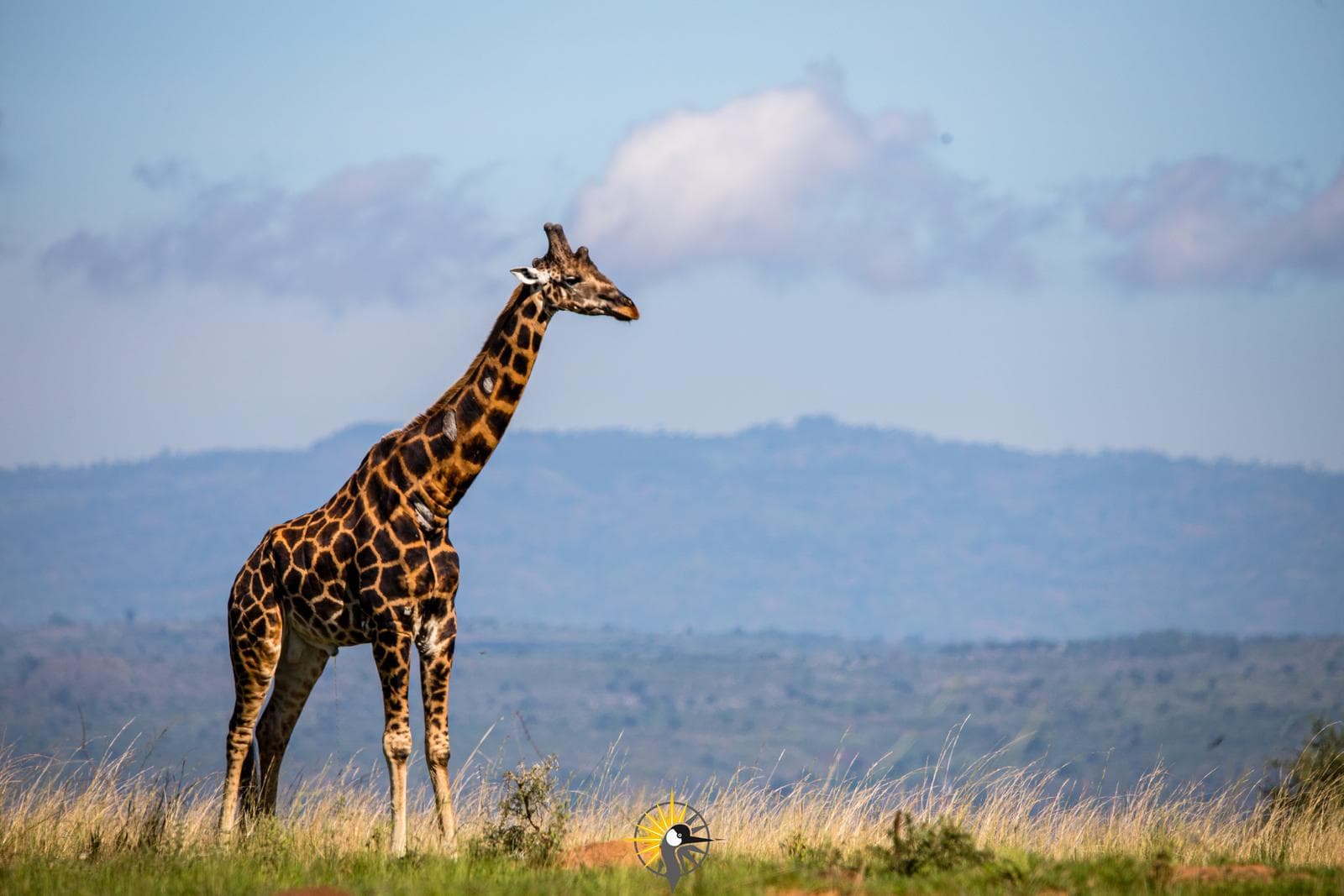
The African Giraffe
The Giraffe (Giraffa camelopardalis) is the tallest land animal on Earth and one of the most iconic species in East Africa. Known for its long neck, distinctive coat patterns, and graceful movement, the giraffe is a highlight of any safari experience. It inhabits open savannahs, woodlands, and acacia-dominated landscapes across Uganda, Kenya, Tanzania, and Rwanda, where it plays a crucial ecological role.
Physical Description
Giraffes are unmistakable due to their extraordinary height, reaching up to 5.5–6 meters tall. Males are significantly larger than females, weighing between 800 and 1,200 kilograms, while females weigh slightly less. Their long neck, which contains the same number of vertebrae as most mammals (seven), allows them to browse vegetation beyond the reach of other herbivores.
Their coat features irregular brown patches separated by lighter lines, with patterns varying by subspecies. Both males and females have horn-like structures called ossicones, though males’ are thicker and often bald at the top due to sparring. Their long, prehensile tongue—often up to 45 cm—helps them strip leaves from thorny acacia trees.
Habitat and Distribution
Giraffes are widely distributed across East Africa, inhabiting savannahs, open woodlands, and bushlands where trees, especially acacias, are abundant.
In Uganda, giraffes are found in Murchison Falls National Park, home to the reintroduced Rothschild’s giraffe, as well as Kidepo Valley National Park and Lake Mburo National Park.
In Kenya, they occur in the Maasai Mara National Reserve, Amboseli National Park, Tsavo East National Park, and Samburu National Reserve, where different subspecies such as the Maasai and reticulated giraffes can be observed.
In Tanzania, giraffes are abundant in Serengeti National Park, Tarangire National Park, and the Ngorongoro Conservation Area.
In Rwanda, giraffes can be seen in Akagera National Park, where conservation efforts have successfully reintroduced populations.
Behavior and Social Structure
Giraffes are social but loosely structured animals, forming groups known as towers. These groups are fluid, with individuals joining and leaving freely. Females often form small nursery groups with calves, while males may roam alone or form bachelor groups.
Male giraffes engage in a behavior called “necking”, where they swing their necks to establish dominance. Despite their size, giraffes are generally calm and non-aggressive, spending much of their day feeding and moving slowly across the landscape.
Diet and Feeding Habits
Giraffes are herbivorous browsers, feeding mainly on leaves, shoots, and flowers from trees and shrubs. Their preferred food source is acacia trees, though they also consume other vegetation when available.
Their long neck and prehensile tongue allow them to access food unavailable to most other herbivores, reducing competition. Giraffes can go for long periods without drinking, obtaining much of their water from the leaves they consume, though they will drink when water is available.
Reproduction
Giraffes breed year-round, with peaks often linked to rainy seasons. After a gestation period of about 15 months, females give birth to a single calf. At birth, calves are already about 1.8 meters tall and can stand within an hour, an essential survival trait in predator-rich environments.
Young giraffes are vulnerable to predators such as lions, hyenas, and leopards, but they are protected by their mothers and the group. As they grow, they quickly learn to browse and navigate their environment.
Conservation Status
Giraffes are currently classified as Vulnerable due to declining populations across Africa. Key threats include:
- Habitat loss and fragmentation
- Poaching
- Human-wildlife conflict
Conservation programs in East Africa, especially in protected areas like Murchison Falls and Akagera, have helped stabilize and even increase some populations, particularly of the endangered Rothschild’s giraffe.
Ecological Role
Giraffes play a vital role in savannah ecosystems. By feeding on tree foliage, they help shape vegetation structure and promote new plant growth. They also aid in seed dispersal, contributing to ecosystem regeneration.
Their height allows them to act as early warning systems for other animals, as they can spot predators from long distances, indirectly benefiting other species in mixed herds.
Observing Giraffes on Safari
Giraffes are among the easiest animals to observe due to their size and preference for open habitats. In Uganda, Murchison Falls National Park offers some of the best sightings, while Serengeti and Maasai Mara provide opportunities to see large populations in expansive landscapes.
Early morning and late afternoon are ideal for viewing, when giraffes are actively feeding. Their slow, elegant movements and distinctive appearance make them a favorite among wildlife photographers.
Conclusion
The giraffe is a symbol of Africa’s wildlife heritage, combining elegance, adaptability, and ecological importance. From Uganda’s protected savannahs to the vast plains of Kenya and Tanzania and the restored habitats of Rwanda, giraffes offer unforgettable safari experiences. Continued conservation efforts are essential to ensure that these gentle giants continue to roam East Africa’s landscapes for generations to come.
Related Animals
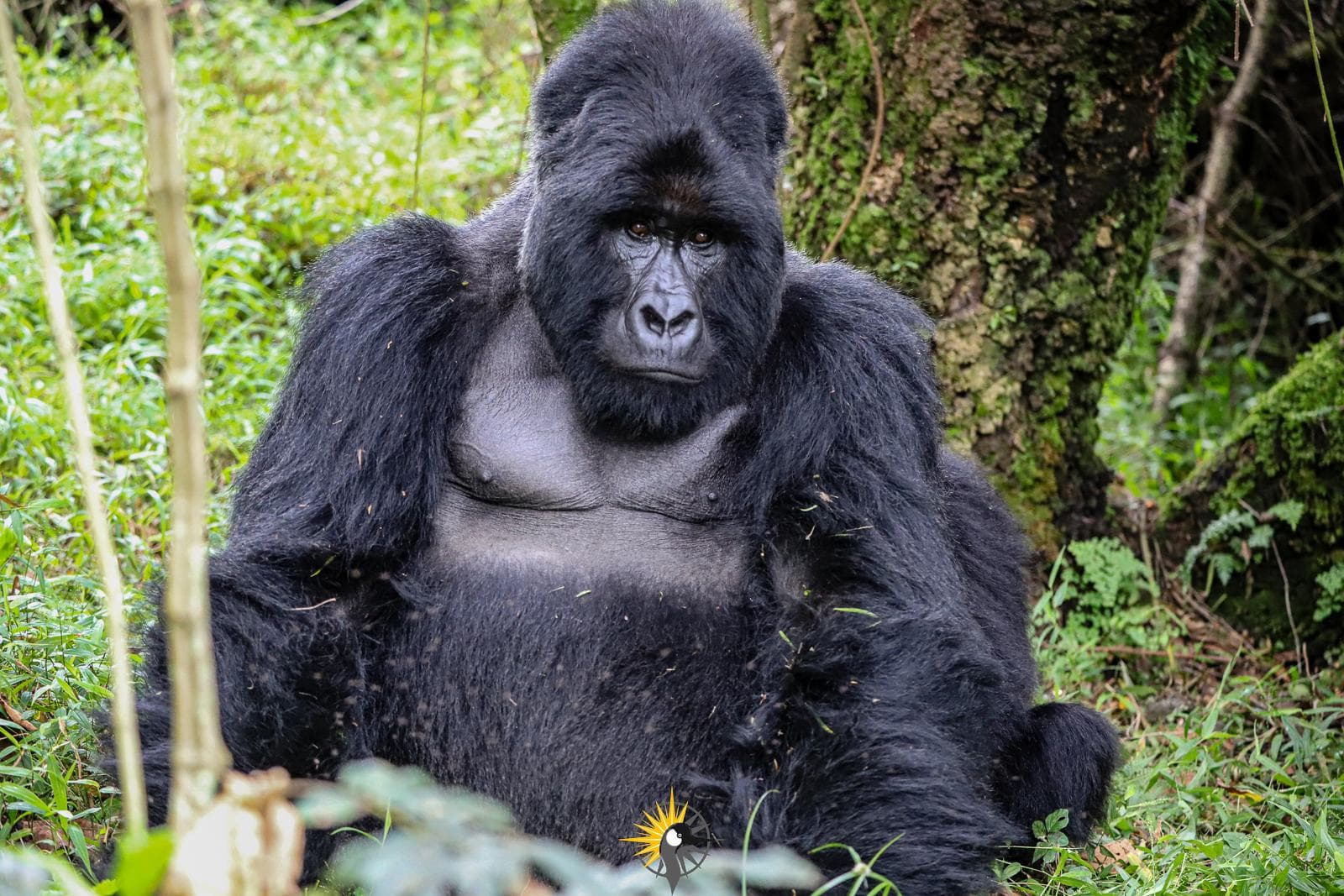
Mountain Gorilla
Explore mountain gorillas in East Africa – observe their social behavior, conservation efforts, and experience unforgettable gorilla trekking adventures.
View animal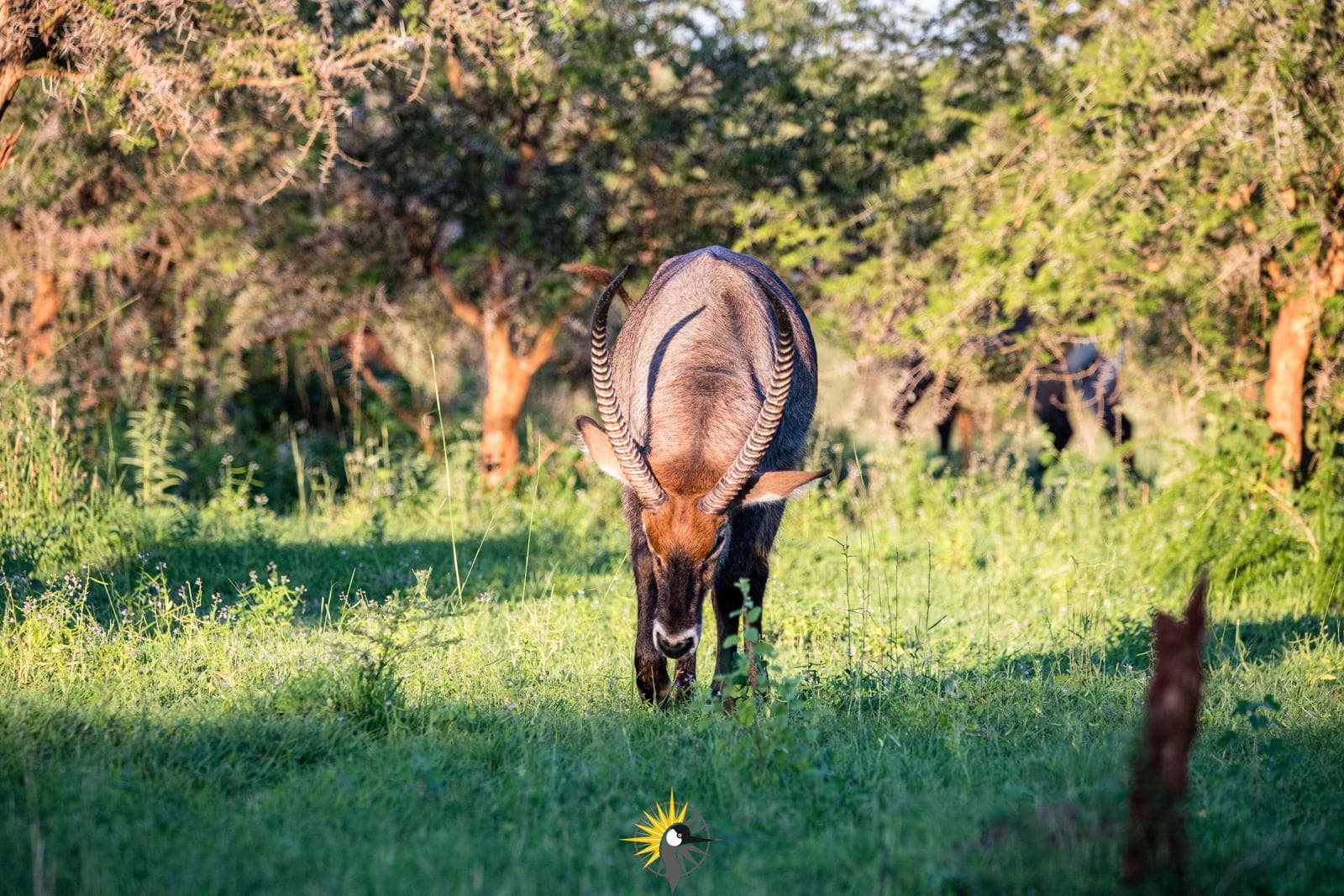
Defassa waterbuck.
Discover the striking waterbuck of East Africa – a resilient antelope near rivers and savannas, perfect for wildlife safaris and photography.
View animal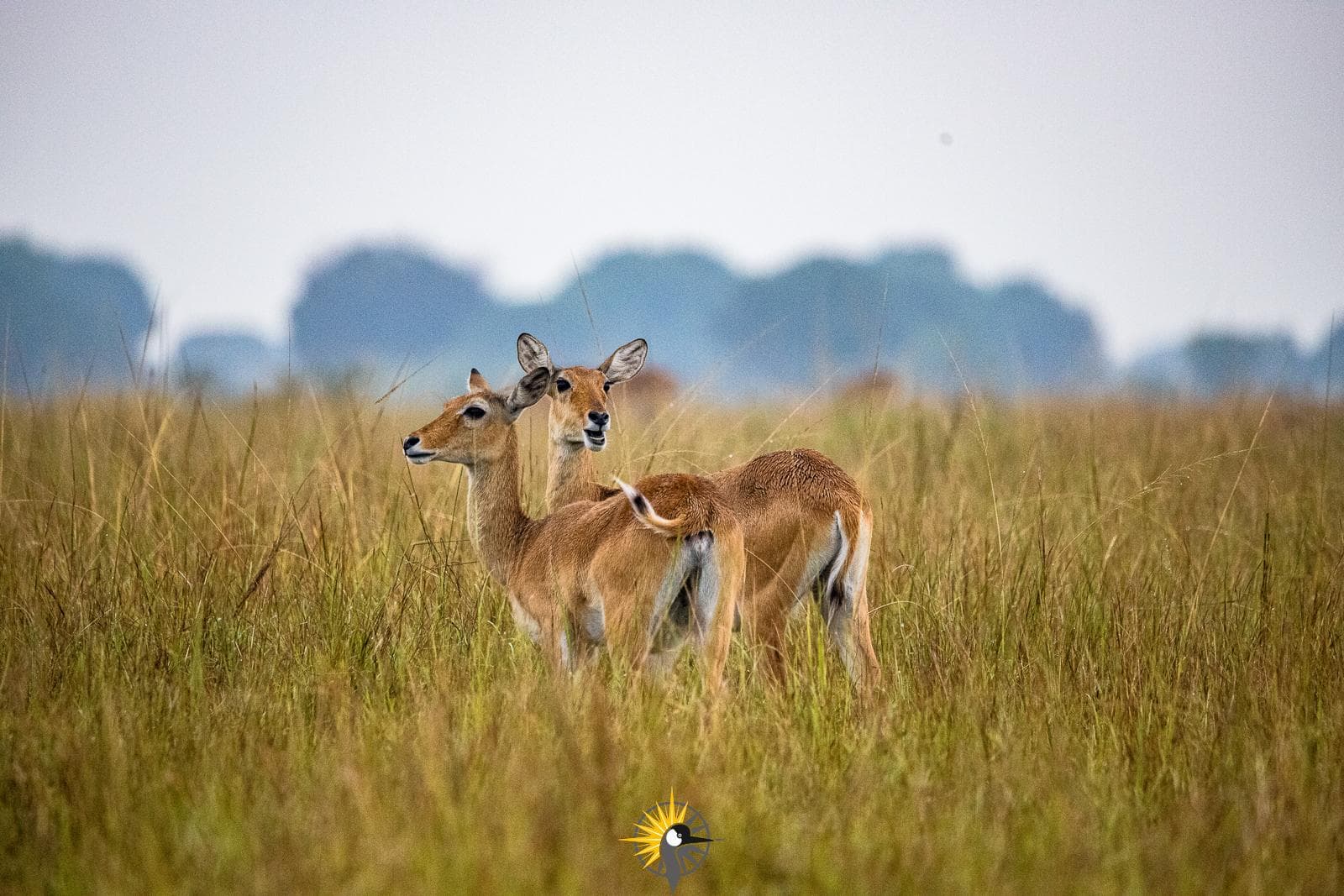
Oribi
Discover the Oribi, a small yet elegant antelope found in East Africa’s grasslands. Learn about its behavior, habitat, and where to spot this elusive species on safari in Uganda, Kenya, and Tanzania.
View animalTop safaris
9 Days Gorilla tracking in Uganda, Tarangire, Ngorongoro, and Serengeti National Park in Tanzania
3 Days Hadzabe, Masai and Ngorongoro Crater Safari, Tanzania
21 Days Epic East Africa safari, gorilla trekking in Bwindi, Big Five safaris and Zanzibar Beach escape
News and Updates
Uganda, Rwanda Primate Trekking and African Safari Packing List
Plan your Uganda and Rwanda safari with a practical packing list for gorilla, chimpanzee and golden monkey trekking, game drives and changing weather.
Read more
Cash Payments and US Dollar Guidelines
Learn how to pay your safari balance in Uganda, Rwanda and Tanzania, including US dollar cash requirements, card payments, fees and local currencies.
Read more
Entebbe for the Seasoned Traveler: Where to Stay, Drink Coffee and Spend Your Time
Discover the best places to stay, drink Ugandan coffee and explore Entebbe, from Lake Victoria cruises and botanical gardens to shoebill tracking and conservation experiences. For many visitors, Entebbe is simply the place where their flight lands before they continue to Kampala, Bwindi, Murchison Falls, or another part of Uganda. Experienced travelers know better. Set along the northern shores of Lake Victoria, Entebbe offers something increasingly rare in modern travel: a gentle arrival. Its leafy streets, tropical gardens, lakeside restaurants, historic institutions, and unhurried atmosphere provide a welcome transition between an international flight and the intensity of an African safari. Entebbe does not demand that you rush from one attraction to another. It rewards travelers who stay for a night or two, recover from the journey, drink good Ugandan coffee, and explore at a considered pace.
Read more