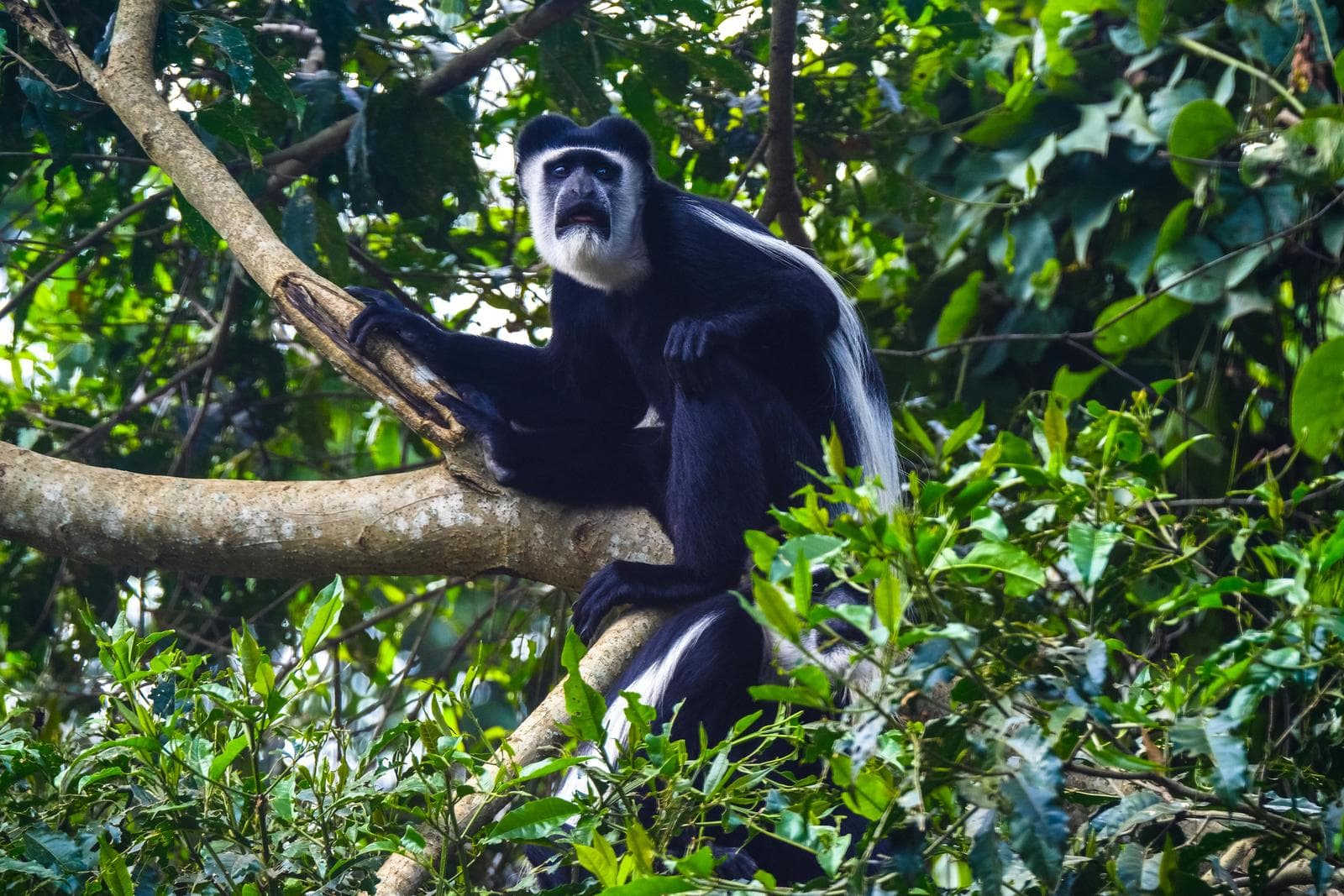
The black and white colobus monkey
The Black-and-White Colobus Monkey (Colobus guereza), often called the Eastern Black-and-White Colobus, is one of East Africa’s most striking and distinctive primates. Recognized for its dramatic black coat contrasted with long white fringes and a flowing tail, this monkey is a true forest specialist. It is commonly found in protected forests and woodland ecosystems across Uganda, Kenya, Tanzania, and Rwanda, where it plays an important ecological role.
Physical Description
The Black-and-White Colobus Monkey is easily identified by its bold coloration, with a jet-black body, a white shoulder mantle, whiskers, and a long white tail tuft. Adults typically weigh between 5 and 14 kilograms, with males being larger than females. Unlike many other monkeys, colobus monkeys lack thumbs, an adaptation that enhances their ability to swing and move efficiently through tree canopies.
Their long limbs and tail provide excellent balance, allowing them to leap distances of over 10 meters between branches. Their striking appearance and graceful movement make them one of the most photogenic primates in East Africa.
Habitat and Distribution
Black-and-White Colobus Monkeys are arboreal primates, meaning they spend most of their lives in trees. They inhabit tropical rainforests, montane forests, riverine forests, and woodland savannahs across East Africa.
In Uganda, they are commonly found in Kibale National Park, Bwindi Impenetrable National Park, Queen Elizabeth National Park, and Budongo Forest Reserve.
In Kenya, they occur in forested areas such as Kakamega Forest and the Aberdare National Park region.
In Tanzania, they are present in Arusha National Park, Jozani Forest, and forested areas around Mount Kilimanjaro.
In Rwanda, they are especially abundant in Nyungwe Forest National Park, which hosts large troops, and also occur in Volcanoes National Park.
These monkeys prefer dense tree cover where they can move freely and access their leafy diet.
Behavior and Social Structure
Black-and-White Colobus Monkeys are highly social, living in groups of 5–15 individuals, though larger troops can occur in rich habitats. A typical group consists of one dominant male, several females, and their offspring.
They are generally calm and less vocal than other primates, though they use calls to communicate within the group and to warn of predators. Grooming and close proximity help maintain strong social bonds.
Unlike many monkeys, colobus monkeys spend most of their time high in the canopy, rarely descending to the ground. Their movement is characterized by graceful leaps and controlled gliding between branches.
Diet and Feeding Habits
Colobus monkeys are primarily folivores, meaning they feed mainly on leaves. Their specialized multi-chambered stomach allows them to digest tough, fibrous plant material that many other primates cannot process.
Their diet includes:
- Young leaves (preferred due to higher nutrients)
- Mature leaves
- Fruits, flowers, and seeds (occasionally)
This unique digestive system reduces competition with other primates, allowing them to thrive in forest ecosystems.
Reproduction
Breeding occurs throughout the year, though peaks may coincide with periods of food abundance. After a gestation period of about 5–6 months, females give birth to a single infant.
Newborn colobus monkeys are completely white at birth, a striking contrast to the adults. Over time, they gradually develop the black-and-white coloration. Infants are cared for not only by their mothers but also by other females in the group, a behavior known as alloparenting.
Conservation Status
The Black-and-White Colobus Monkey is generally classified as Least Concern, but certain subspecies face localized threats. These include:
- Habitat loss due to deforestation and agriculture
- Hunting in some regions
- Fragmentation of forest habitats
Protected areas such as Kibale, Nyungwe, and Kakamega Forest play a crucial role in conserving stable populations across East Africa.
Ecological Role
Colobus monkeys are important for the health of forest ecosystems. As leaf-eaters, they help regulate vegetation growth, and their movement contributes to seed dispersal. Their presence also supports predator populations such as leopards and large birds of prey.
They are considered an indicator species, meaning their presence reflects healthy forest ecosystems.
Observing Black-and-White Colobus Monkeys
These monkeys are among the easiest primates to observe in forest habitats. Some of the best places include Kibale Forest in Uganda and Nyungwe Forest in Rwanda, where large troops can be seen moving gracefully through the canopy.
Early morning and late afternoon are the best times for sightings, when they are most active, feeding, and socializing. Their striking black-and-white coloration makes them easy to spot even in dense foliage.
Conclusion
The Black-and-White Colobus Monkey is a graceful and visually striking primate that adds richness to East Africa’s forests. From Uganda’s lush rainforests to Rwanda’s montane jungles and Kenya’s remaining tropical forests, these monkeys offer unique and memorable wildlife encounters. Protecting forest habitats is essential to ensure their continued survival and the health of the ecosystems they inhabit.
Related Animals
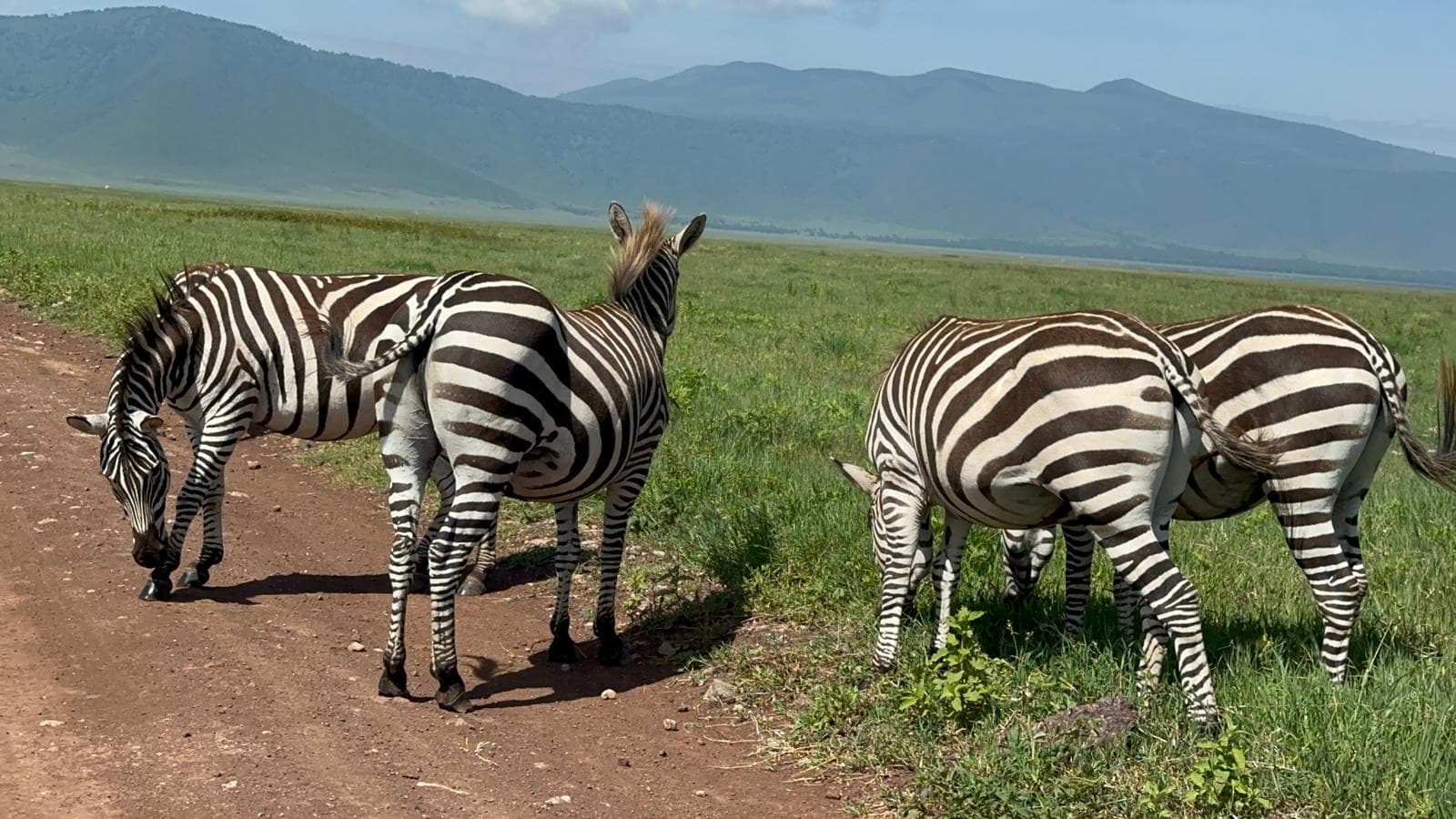
Zebra
Discover zebras in East Africa, from Plains Zebras of the Serengeti to rare Grevy’s Zebras in Kenya, and learn how tourism supports conservation.
View animal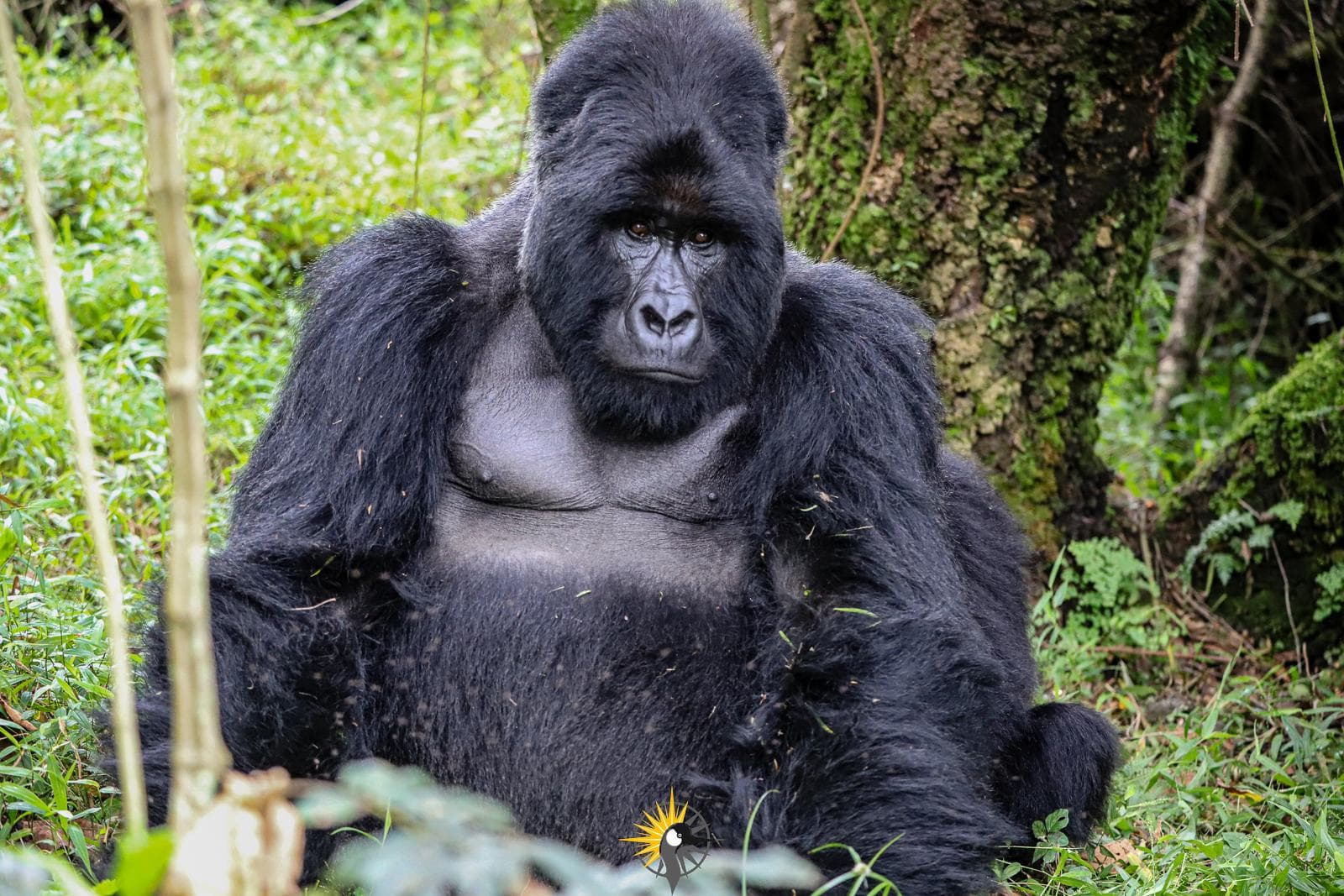
Mountain Gorilla
Explore mountain gorillas in East Africa – observe their social behavior, conservation efforts, and experience unforgettable gorilla trekking adventures.
View animal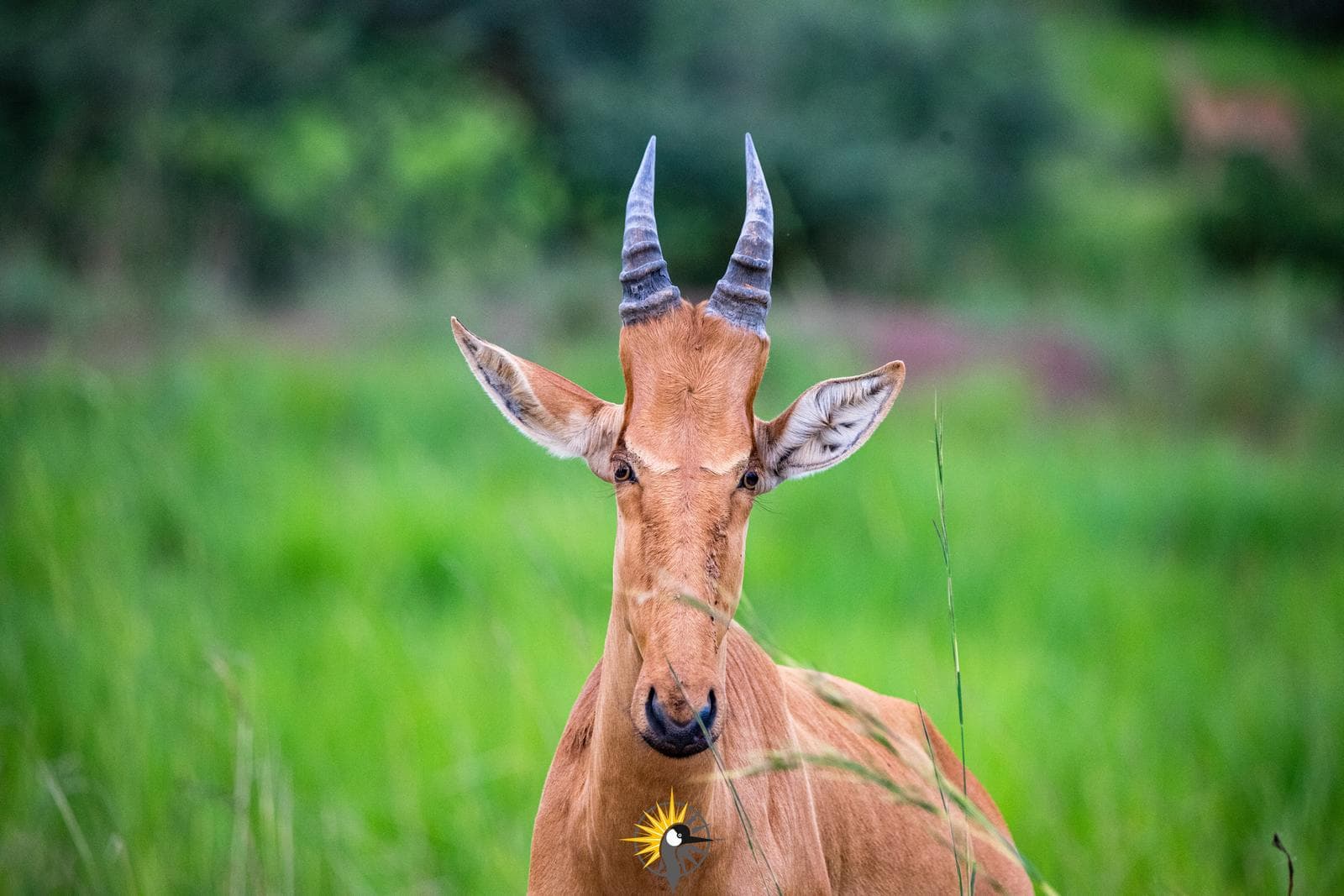
Jackson’s Hartebeest
Discover the Jackson’s Hartebeest on an East African safari with Musana Tours and Travel. Learn about its habitat, behavior, and the best places to see this rare antelope in Uganda.
View animalTop safaris
9 Days Gorilla tracking in Uganda, Tarangire, Ngorongoro, and Serengeti National Park in Tanzania
3 Days Hadzabe, Masai and Ngorongoro Crater Safari, Tanzania
21 Days Epic East Africa safari, gorilla trekking in Bwindi, Big Five safaris and Zanzibar Beach escape
News and Updates
Uganda, Rwanda Primate Trekking and African Safari Packing List
Plan your Uganda and Rwanda safari with a practical packing list for gorilla, chimpanzee and golden monkey trekking, game drives and changing weather.
Read more
Cash Payments and US Dollar Guidelines
Learn how to pay your safari balance in Uganda, Rwanda and Tanzania, including US dollar cash requirements, card payments, fees and local currencies.
Read more
Entebbe for the Seasoned Traveler: Where to Stay, Drink Coffee and Spend Your Time
Discover the best places to stay, drink Ugandan coffee and explore Entebbe, from Lake Victoria cruises and botanical gardens to shoebill tracking and conservation experiences. For many visitors, Entebbe is simply the place where their flight lands before they continue to Kampala, Bwindi, Murchison Falls, or another part of Uganda. Experienced travelers know better. Set along the northern shores of Lake Victoria, Entebbe offers something increasingly rare in modern travel: a gentle arrival. Its leafy streets, tropical gardens, lakeside restaurants, historic institutions, and unhurried atmosphere provide a welcome transition between an international flight and the intensity of an African safari. Entebbe does not demand that you rush from one attraction to another. It rewards travelers who stay for a night or two, recover from the journey, drink good Ugandan coffee, and explore at a considered pace.
Read more