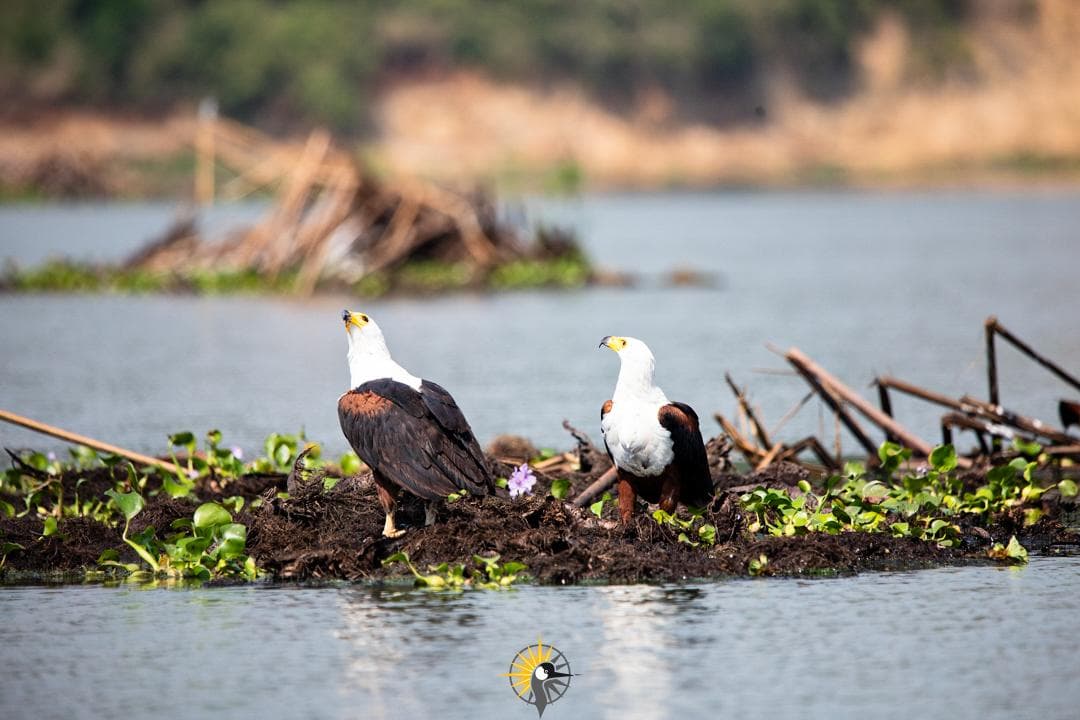
The African Fish Eagle
The unmistakable call of the African Fish Eagle (Haliaeetus vocifer) is one of the most powerful sounds of the African wilderness. Rolling across lakes and rivers at dawn and dusk, its cry has earned it the title “The Voice of Africa.” With its snow-white head, rich chestnut body, and broad wings built for soaring, this magnificent bird of prey is one of East Africa’s most iconic wildlife species.
For travelers exploring Uganda, Rwanda, Kenya, and Tanzania, encountering the African Fish Eagle is often a defining safari moment—whether on a Nile boat cruise, a lakeside game drive, or a dedicated birdwatching tour.
Understanding the African Fish Eagle
Scientific Identity and Classification
The African Fish Eagle belongs to the sea eagle family and is scientifically known as Haliaeetus vocifer. It is closely related to other large eagles found near water, but its coloration and voice make it uniquely African.
Physical Appearance and Identification Features
This raptor is easily recognized by its white head and tail, deep brown body, and black wings. Its powerful yellow talons are perfectly adapted for gripping slippery fish, while its hooked beak allows it to tear prey with ease.
Wingspan, Size, and Flight Behavior
With a wingspan reaching up to 2.4 meters, the African Fish Eagle cuts an imposing figure in the sky. It often soars effortlessly above water bodies, using thermal currents to conserve energy while searching for prey.
Behavior and Diet of the African Fish Eagle
Primary Diet and Feeding Preferences
Fish form the backbone of the African Fish Eagle’s diet, particularly species such as tilapia and catfish. However, the bird is highly adaptable and will take advantage of whatever food sources are available in its environment.
Opportunistic Hunting and Scavenging Behavior
Beyond fish, the African Fish Eagle also preys on waterbirds, small mammals, amphibians, and reptiles. When opportunities arise, it will scavenge carrion, demonstrating remarkable survival flexibility.
Hunting Techniques and Aerial Precision
The eagle typically hunts from a high perch, scanning the water below. Once prey is spotted, it launches into a dramatic dive, extending its talons at the last moment to snatch fish from the surface with breathtaking accuracy.
Ecological Role in Aquatic Ecosystems
By targeting weak or diseased fish, the African Fish Eagle helps regulate fish populations and maintain balanced aquatic ecosystems. Its presence is often a strong indicator of healthy wetlands and clean water.
Breeding and Nesting Habits
Lifelong Pair Bonds and Mating Behavior
African Fish Eagles are monogamous and often mate for life. These strong pair bonds are reinforced through shared hunting, nest building, and parental care.
Nest Construction Near Water Sources
Nests are built in tall trees close to lakes and rivers, using sticks, grasses, and other vegetation. Over time, these nests grow larger as they are reused and reinforced each breeding season.
Egg Laying, Incubation, and Parental Care
Females typically lay between one and three eggs. Both parents take turns incubating the eggs and later feeding and protecting the chicks until they are ready to fledge.
Growth and Fledging of Young Eagles
Eaglets usually fledge at around 10 weeks of age. During this period, they remain heavily dependent on their parents, learning essential survival skills.
Where to experience the African Fish Eagle in East Africa
East Africa is a prime destination for encountering the African Fish Eagle, thanks to its abundance of freshwater lakes, rivers, and wetlands. The bird is not only a favorite among birdwatchers but also a highlight for anyone embarking on a safari or nature-focused tour in the region.
Uganda
Uganda, often referred to as the “Pearl of Africa,” is home to an array of water bodies that attract the African Fish Eagle. Lake Victoria, the largest freshwater lake in Africa, is a prime location to spot these eagles as they perch on lakeside trees or hunt in the shallows. Queen Elizabeth National Park offers another spectacular setting, where the Kazinga Channel provides a thriving habitat for fish eagles alongside other aquatic wildlife. Murchison Falls National Park, with the Nile River flowing through it, also offers excellent opportunities to see these majestic birds in action.
Rwanda
In Rwanda, the African Fish Eagle thrives in scenic locations such as Lake Kivu and Akagera National Park. Lake Kivu, one of Africa’s Great Lakes, is a serene spot where the eagles can often be seen soaring above its tranquil waters. Akagera, with its expansive wetlands and lakes, is another hotspot where visitors can enjoy the sights and sounds of this magnificent bird.
Kenya
Kenya’s diverse landscapes include several prime locations for spotting the African Fish Eagle. Lake Naivasha, a freshwater lake in the Great Rift Valley, is a birding paradise where fish eagles are among the highlights. Their distinct calls often echo across the lake, especially during early mornings. Lake Nakuru, famous for its flamingos, also provides an excellent habitat for these raptors. For a more remote and pristine experience, the Mara River in the Maasai Mara offers opportunities to see the eagles alongside dramatic wildlife spectacles like the Great Migration.
Tanzania
Tanzania offers some of the most iconic settings for viewing the African Fish Eagle. Lake Manyara National Park, with its soda lake teeming with birdlife, is a fantastic spot to observe these eagles in their element. The Selous Game Reserve, one of Africa’s largest protected areas, is another ideal location, with its network of rivers and wetlands providing a haven for fish eagles. Lastly, the shores of Lake Victoria in northern Tanzania offer a perfect setting to see the bird against the backdrop of the world’s second-largest freshwater lake.
Conservation and cultural significance
The African Fish Eagle plays a vital role in maintaining the health of aquatic ecosystems, but it is also deeply intertwined with the cultural fabric of East Africa. Revered for its strength, grace, and resilience, it is a symbol of natural abundance. However, threats such as habitat loss, pollution, and overfishing pose challenges to its survival in some areas. Conservation efforts in East Africa focus on protecting wetlands, regulating fishing practices, and raising awareness about the importance of preserving these ecosystems.
For visitors to Uganda, Rwanda, Kenya, and Tanzania, the African Fish Eagle is more than just a bird—it’s a living emblem of Africa’s beauty and wilderness. Its presence adds a magical touch to any safari or birding adventure, leaving lasting memories for all who encounter it.
Related Birds
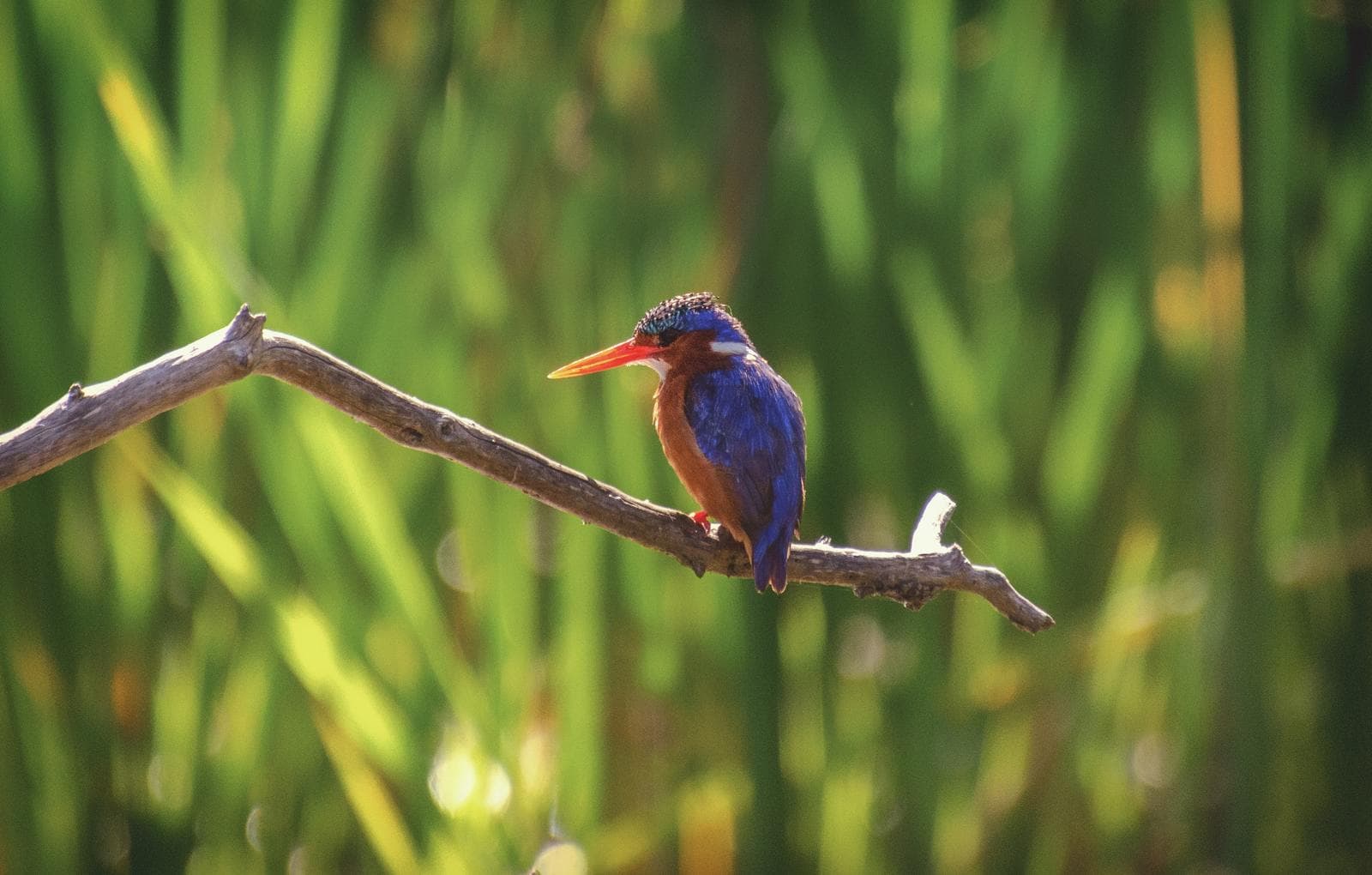
Malachite Kingfisher
See the dazzling Malachite Kingfisher on birding safaris in Uganda, Rwanda, Kenya & Tanzania. Expert-guided tours for USA, UK & Europe.
View bird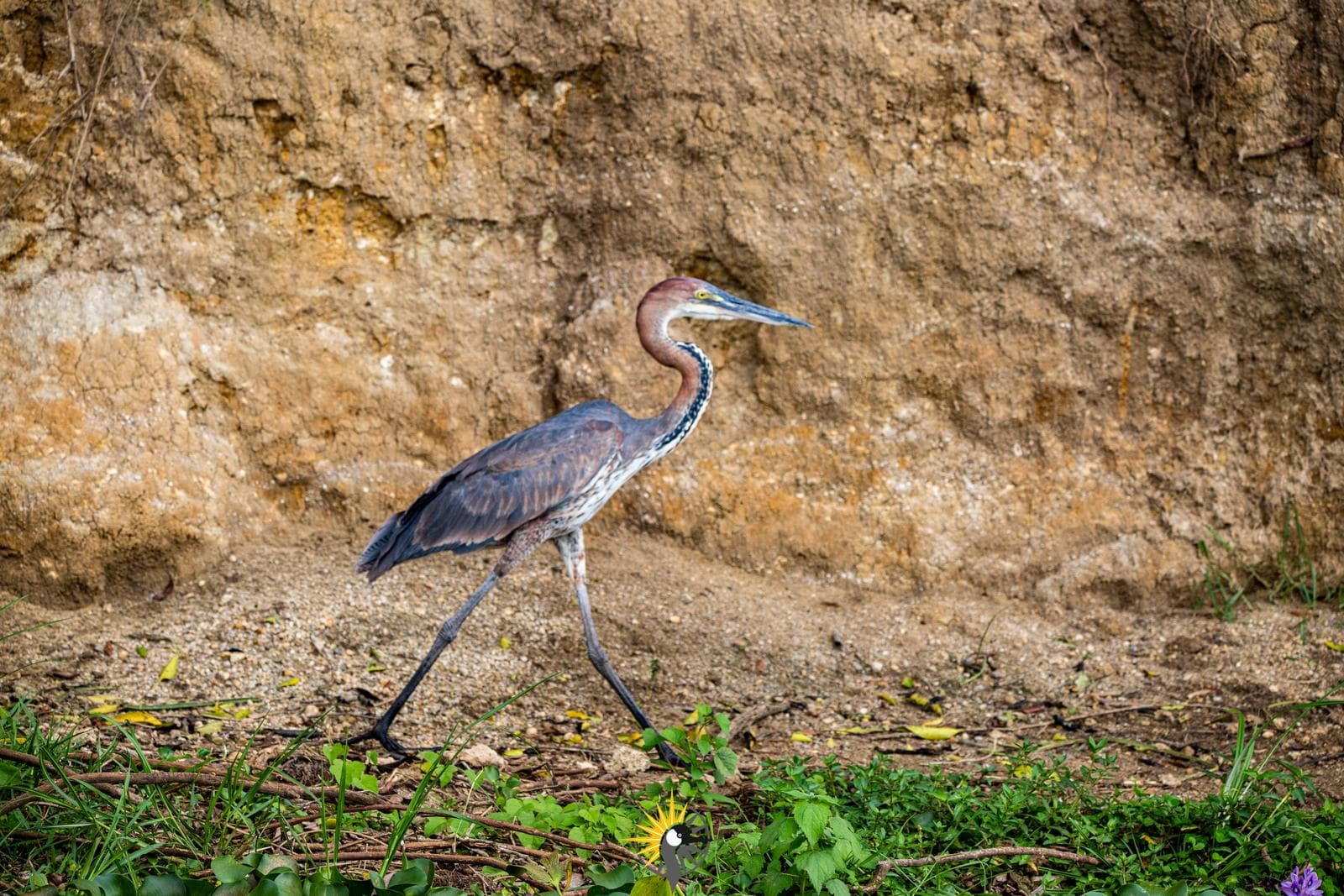
Goliath Heron
Explore the Goliath Heron, East Africa’s largest and most majestic wetland bird. Explore its habitat, hunting behavior, and the best bird-watching locations in Uganda, Kenya, and Tanzania.
View bird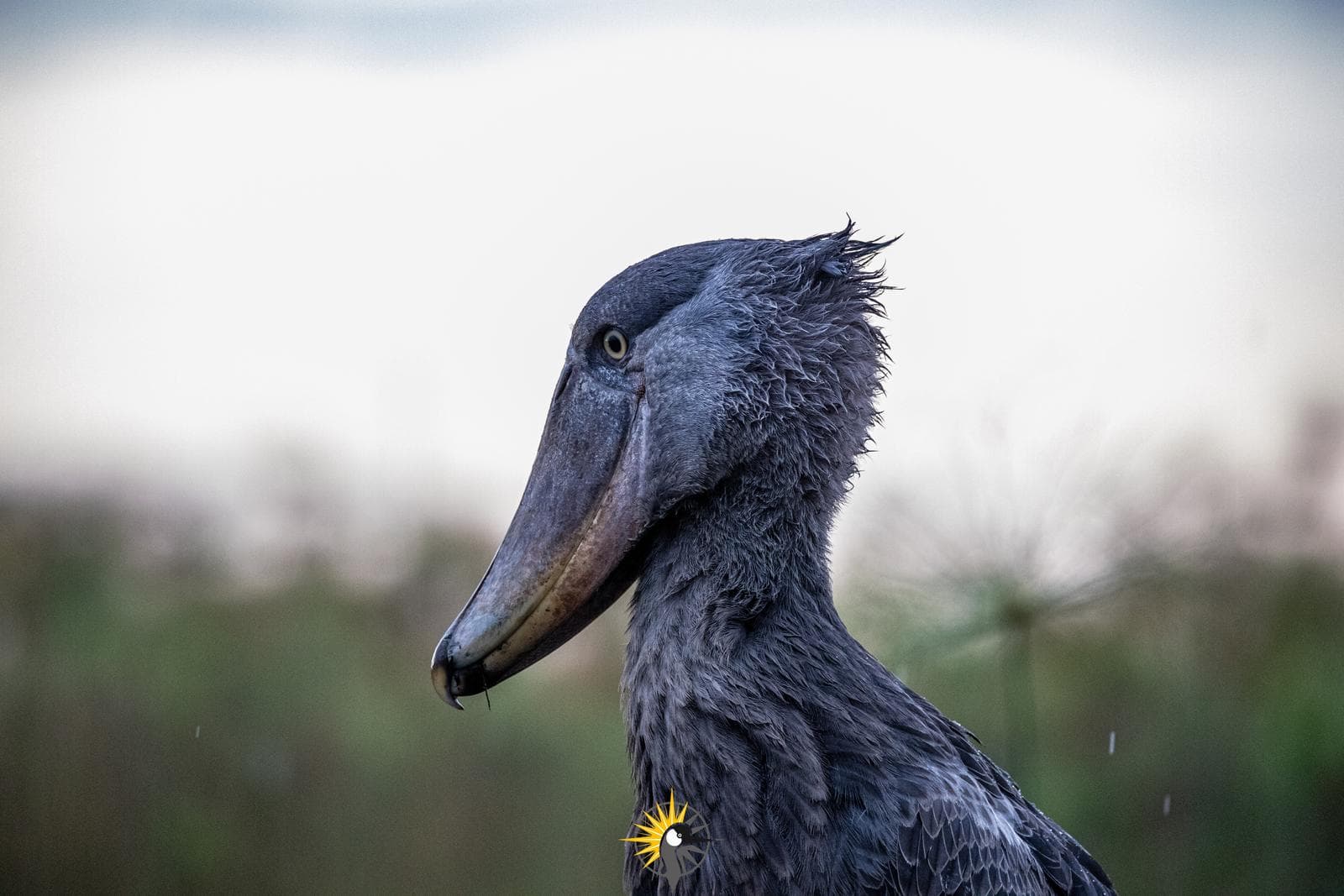
The Shoebill Stork
Discover shoebill stork safaris in Uganda & Rwanda. Expert-guided birdwatching tours for USA, UK & Europe travelers. Book with Musana Tours.
View birdEast Africa Safari Packages in Uganda, Rwanda, Kenya, Tanzania & DRC
2 Days Gorilla trekking in Uganda
3 Days Uganda mid range tour
12 Days Uganda Wildlife Safari and Rwanda with Lake Kivu
News and Updates
Uganda, Rwanda Primate Trekking and African Safari Packing List
Plan your Uganda and Rwanda safari with a practical packing list for gorilla, chimpanzee and golden monkey trekking, game drives and changing weather.
Read more
Cash Payments and US Dollar Guidelines
Learn how to pay your safari balance in Uganda, Rwanda and Tanzania, including US dollar cash requirements, card payments, fees and local currencies.
Read more
Entebbe for the Seasoned Traveler: Where to Stay, Drink Coffee and Spend Your Time
Discover the best places to stay, drink Ugandan coffee and explore Entebbe, from Lake Victoria cruises and botanical gardens to shoebill tracking and conservation experiences. For many visitors, Entebbe is simply the place where their flight lands before they continue to Kampala, Bwindi, Murchison Falls, or another part of Uganda. Experienced travelers know better. Set along the northern shores of Lake Victoria, Entebbe offers something increasingly rare in modern travel: a gentle arrival. Its leafy streets, tropical gardens, lakeside restaurants, historic institutions, and unhurried atmosphere provide a welcome transition between an international flight and the intensity of an African safari. Entebbe does not demand that you rush from one attraction to another. It rewards travelers who stay for a night or two, recover from the journey, drink good Ugandan coffee, and explore at a considered pace.
Read more